Science

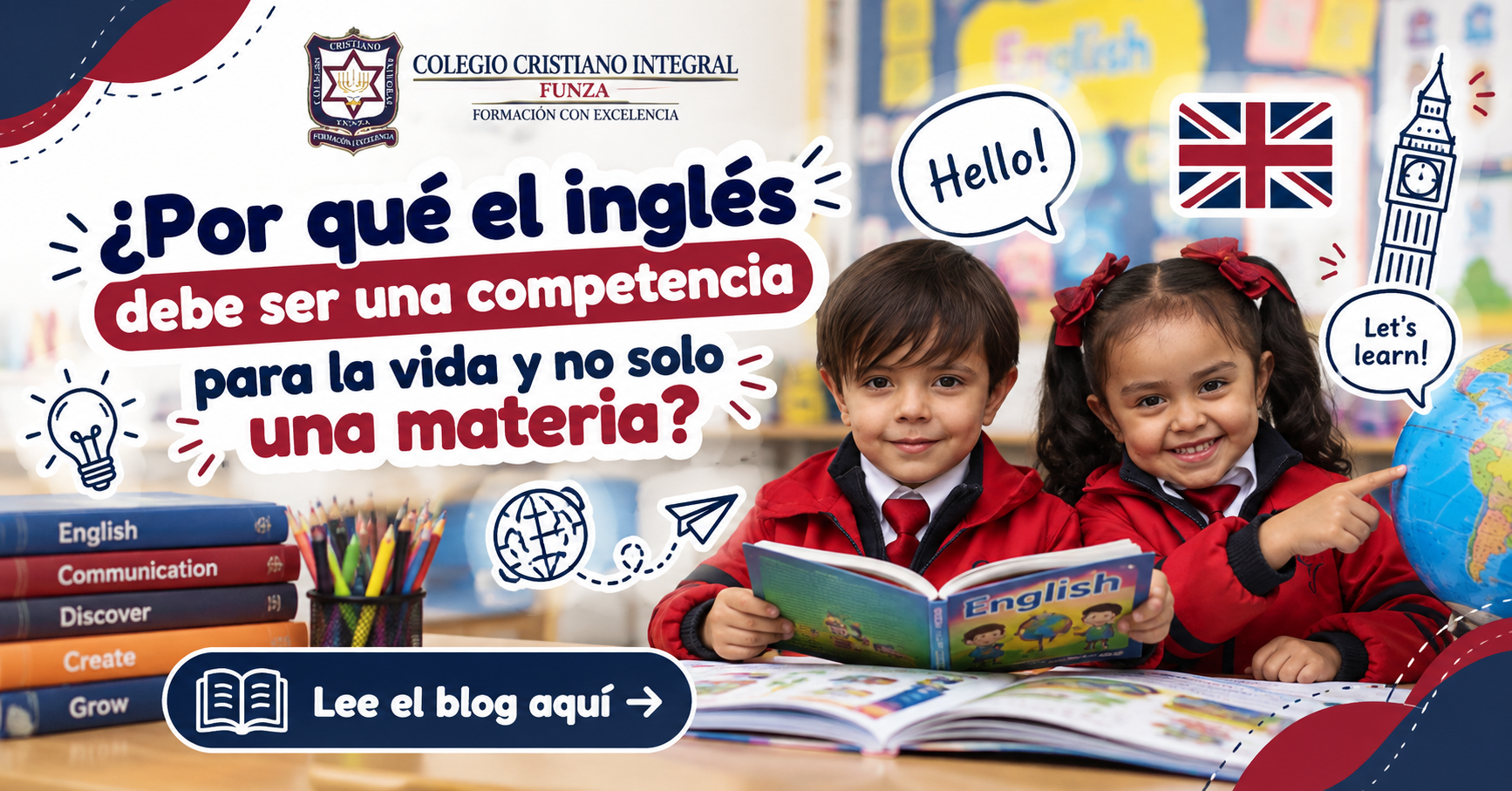
Why should English be a life skill and not just a subject?

Your child may get a 5.0 in English, memorize hundreds of words, and pass all their exams. But what happens when they need to have a real conversation in that language? Imagine this situation: A student has been taking English classes for several years. He knows the grammar rules, can identify verbs, and can correctly complete the exercises in his […]

October 6, 2026 13-minute read
Why should English be a life skill and not just a subject?
Institutional News Science

Your child may get a 5.0 in English, memorize hundreds of words, and pass all their exams. But what happens when they need to have a real conversation in that language?

Imagine this situation:

A student has been taking English classes for several years. He knows the grammar rules, can identify verbs, and can correctly complete the exercises in his textbook.

One day, he meets a foreigner who asks him:

“Hi! What's your name? What do you like to do?”

The student understands a few words, but remains silent. He is afraid of making a mistake, doesn't know how to structure a response, and ends up saying, “I don't know how to speak English.”.

This situation prompts us to reflect on a fundamental difference: Studying English doesn't always mean you've learned to communicate in English.

In a world where technology, education, and international relations are increasingly interconnected, English should be viewed as a skill that people carry with them throughout their lives.

That's why, when looking for a school in Funza, parents should evaluate not only how many hours of English their children receive, but also how they are developing their ability to use the language in everyday situations.

1. Learning English is much more than just memorizing vocabulary and grammar rules

For a long time, language instruction has been associated with memorizing lists of verbs, completing exercises, and taking written tests.

This knowledge is important because it helps us understand the structure of the language.

However, learning English also involves developing the ability to listen, interpret, express ideas, and interact with others.

Let's think about how we learn our native language.

Before we formally learn the rules of grammar, we learn to listen, ask questions, respond, and interact with the world around us.

When learning a second language, opportunities for interaction also play an important role.

For this reason, English language instruction should progressively develop four fundamental skills:

  • Listening (to listen): understand conversations, questions, and instructions.

  • Speaking: express thoughts, needs, and opinions.

  • Reading: understand texts and written information.

  • Writing: communicate ideas through messages and texts.

These skills complement one another and enable learners to use the language with increasing independence.

Real progress occurs when students begin to use what they know to communicate, not just to answer questions on a test.

2. English should be used to handle everyday situations

Imagine that your child is traveling and needs to ask for directions.

Or what one needs to understand the instructions for an app.

Maybe you want to talk to someone from another country, take part in an international activity, or look up information on a topic you're passionate about.

In any of these situations, English ceases to be a school subject and becomes a practical tool.

For this reason, students should have opportunities to develop communication skills related to real-life situations.

For example:

Introducing Themselves and Talking About Themselves

“My name is Daniel. I’m from Colombia. I love science and technology.”

Ask questions to gather information

“Excuse me, where is the library?”

Expressing Opinions and Preferences

“I think this is a good idea because…”

Ask for help when they don't understand something

“Could you repeat that, please?”

Explain ideas and participate in conversations

“Let me explain how it works.”

These examples show that language serves a specific purpose.

It's not about all children having to speak English perfectly from a young age. The goal is to develop their skills gradually, taking into account their age and level of learning.

English becomes a life skill when students can use it to understand the world and participate in it.

3. Why can learning English in school make a difference?

Childhood and adolescence offer numerous opportunities to develop communication skills and build learning habits.

Exposure to a second language during the school years allows students to gain experience in listening, reading, writing, and interacting over the course of several years.

However, starting early does not automatically guarantee that you will master the language.

The quality of instruction, continuity of learning, motivation, and opportunities to practice are also important.

That is why parents should take an interest in the experiences the school offers.

For example, they may ask whether students participate in:

  • Conversations tailored to your level.

  • Role-playing games and reenactments of everyday situations.

  • Listening and Comprehension Activities.

  • Age-appropriate reading material.

  • Oral presentations.

  • Collaborative projects.

  • Activities that integrate English with other subjects.

These experiences can help students stop viewing the language as an isolated task and instead connect it to situations that are meaningful to them.

4. English is also a tool for learning about technology, science, and new skills

Currently, a significant portion of educational resources, scientific research, and technical documentation is available in English.

This means that understanding the language can expand access to information and learning opportunities.

Let's imagine a student who is interested in programming.

Many tools, tutorials, and technical documents use English terminology.

A student passionate about science can find videos, articles, and international educational resources.

And a young person interested in artificial intelligence can consult materials and courses originally published in that language.

In these cases, English becomes a means of learning other things.

You don't learn English just to pass an English test. You also learn it to explore new knowledge.

For this reason, developing communication skills can complement academic training in science, technology, mathematics, and other fields of knowledge.

The goal is not to replace Spanish or downplay the importance of our native language.

The goal is to expand the tools students have for accessing knowledge and communicating.

5. English can expand educational and career opportunities

When parents think about their children's future, they often imagine college opportunities, career paths, entrepreneurial ventures, and experiences that will allow them to reach their full potential.

In many of these situations, knowing English can be an advantage.

Some universities offer programs, scholarships, or exchange opportunities that require a certain level of proficiency in the language.

There are also international courses, certifications, and academic resources offered in English.

In the workplace, certain organizations require people who can communicate with international clients, teams, or suppliers.

However, we need to clarify something important.

Speaking English does not guarantee that you will receive a scholarship, be admitted to a university, or get a job.

These opportunities depend on many factors.

What the language can offer, however, is an additional tool for participating in experiences that require international communication.

For this reason, it is worthwhile for students to develop this skill progressively throughout their school years.

6. The fear of making mistakes can become a barrier to speaking English

One of the challenges of language learning is the insecurity some students feel when trying to communicate.

Sometimes they know the words, but they're afraid of saying them incorrectly.

At other times, they understand the question but choose to remain silent for fear of being corrected in front of their classmates.

That's why the learning environment is so important.

An English class should provide opportunities to practice, receive respectful feedback, and understand that making mistakes is part of the process.

Teachers can create opportunities where students:

  • Participate without fear of being ridiculed.

  • Practice conversations that are appropriate for your level.

  • Be open to constructive criticism.

  • Recognize their progress.

  • Learn to listen to your classmates.

  • Build trust gradually.

Confidence does not replace knowledge of the language, but it can encourage students to feel confident enough to use what they are learning.

Here, too, there is a significant connection between English language instruction and well-rounded education.

Respect, empathy, perseverance, and responsibility help create environments where students can learn and develop their skills.

7. How can you tell if your child is really learning English?

This is one of the most important questions parents should ask themselves.

A good grade is an indicator of performance on specific assessments, but it does not necessarily reflect all of a student's communication skills.

For this reason, it is advisable to monitor their progress in practical situations that are appropriate for their level.

Here are some signs to look out for.

It includes simple instructions

Depending on your age and level, you can respond to everyday expressions such as:

“Please open your book.”

“What is your favorite color?”

Can express ideas using their own sentences

He doesn't just repeat memorized words; he begins to construct answers.

For example:

“My favorite subject is science because I like experiments.”

Try to communicate, even if you make mistakes

Understand that you don't need to speak perfectly to start practicing.

Use English outside of tests

Recognizes words in songs, videos, games, reading materials, and other age-appropriate contexts.

Shows progress over time

He is able to understand more complex texts, participate in conversations, and express ideas that he previously could not communicate.

It is important to remember that learning does not occur at the same pace for all students.

For this reason, it is best to compare each child's progress with their own goals and previous levels, rather than constantly comparing them to their peers.

8. What should parents consider when looking for a school with an emphasis on English in Funza?

If you're comparing Private schools in Funza, it is advisable to understand how English instruction actually takes place.

Some institutions offer a more intensive course load, others have specialized programs, and some have developed bilingual educational models.

These concepts do not mean exactly the same thing.

Offering English classes does not automatically make an institution a bilingual school.

So, before making a decision, ask yourself the following questions:

What is the goal of the English program?

Ask what skills students are expected to develop at each grade level.

How do you approach a conversation?

Find out what opportunities children have to use the language orally.

How is progress evaluated?

It is important to know whether listening, speaking, reading, and writing skills are taken into account.

What methodologies do they use?

Ask how communication activities, educational resources, and hands-on experiences are integrated.

What does the school's emphasis on bilingualism mean?

Request information about the curriculum, the number of hours, the learning levels, and any certifications, if available.

How do they support students who are struggling?

Learning a second language requires consistency and support.

These questions are especially helpful for families looking for a School with a focus on English in Funza and want to learn more about the scope of their educational proposal.

9. Colegio Cristiano Integral de Funza: English, academic training, and purpose-driven education

In the Funza Comprehensive Christian School We understand that learning a second language is part of preparing students for an increasingly connected world.

For this reason, our academic program places an emphasis on bilingualism aimed at progressively strengthening communication skills in English.

This proposal is part of our vision of a well-rounded education, which seeks to complement academic development with the personal, spiritual, and social growth of our students.

We believe it is important that learning not be limited to memorizing content, but rather that it help develop skills that children and young people can use throughout their lives.

English is one such tool.

But we also recognize that knowledge takes on greater meaning when it is accompanied by responsibility, respect, integrity, and purpose.

To learn more about our English program, its objectives, and the educational experiences we offer, we invite families to speak with our academic team.

If you're looking for a Christian school in Funza that combines academic education, Christian principles, and the development of skills for the future, we invite you to learn more about our educational program.

10. What can parents do at home to support their children's English learning?

Learning doesn't have to end when the school day is over.

At home, families can create small opportunities for their children to stay in touch with the language.

Parents don't need to be experts in English.

The important thing is to foster positive experiences that are tailored to each child's age and interests.

Here are some recommendations:

Listen to songs in English. They can use children's songs or age-appropriate content to identify new expressions.

Read together. Picture books and short stories can help children associate words with images and situations.

Practice everyday expressions. Saying hello, saying goodbye, expressing gratitude, or naming objects are simple opportunities for interaction.

Use digital educational resources. Platforms and apps can complement learning when used with guidance and supervision.

Celebrate small steps forward. Recognizing effort helps boost motivation.

Avoid making fun of others for their mistakes. Children need to understand that learning a language is a process and that making mistakes is part of it.

Family involvement can complement the work of teachers and help students find new reasons to apply what they learn.

Conclusion: English shouldn't be confined to a notebook

Our children will grow up in a society where technologies, professions, and ways of communicating will continue to evolve.

In this context, learning English can be an opportunity to expand your knowledge, communicate with others, and engage in new academic and personal experiences.

But to achieve that goal, it's important to reframe the question.

Instead of just asking:

What grade did my son get in English?

We should also ask ourselves:

What can my child do with the English he or she is learning?

Can you express yourself?

Can you understand information?

Can you join the conversation?

Can you use language to discover something new?

Because a grade reflects an academic achievement, but developing communication skills means building a tool that can serve you throughout your life.

English shouldn't just be a subject you pass. It should become a skill that you learn, practice, and use.

Give your child the tools to communicate with the world

At the Colegio Cristiano Integral de Funza, we strive to provide an education that integrates academic knowledge, character development, and skills for the future.

We invite you to learn about our educational program, our focus on bilingualism, and the learning opportunities available to our students.

Learn about our 2027 admissions process

Colegio Cristiano Integral — Funza, Cundinamarca.

Education with excellence and purpose.


Frequently Asked Questions About Learning English

Why is English a life skill?

Because it allows people to communicate, access information, participate in educational experiences, and develop skills that are useful in various personal, academic, and professional situations.

At what age should children start learning English?

Children can be exposed to a second language from an early age through activities appropriate for their developmental stage. Consistency, the quality of instruction, and opportunities for practice are essential.

Is a bilingual school better, or one with an emphasis on English?

It depends on each family's needs and learning goals. The important thing is to understand the program's actual scope, methodology, class schedule, and the results the institution hopes to achieve.

How can I tell if my child is learning English properly?

You can observe their ability to understand instructions, express ideas, participate in conversations, and progressively use the language in real-life situations, taking into account their age and level of learning.

What's the difference between knowing grammar and speaking English?

Understanding grammar helps you grasp the structures of the language. Speaking English also requires developing skills in listening, pronunciation, vocabulary, interaction, and oral expression.

Does the Colegio Cristiano Integral de Funza place an emphasis on bilingualism?

Yes. The school's academic program is designed to progressively strengthen students' English communication skills. To learn more about the program's current features, families can request information directly from the school.

Why is English important in today's education system?

Because it can expand access to educational content, technological resources, intercultural experiences, and lifelong learning opportunities.

CCI Community

Comments

Leave a reply

Your email address will not be published.

Why should English be a life skill and not just a subject?

This is the right training place for your children.

Would you like to learn more about our school and begin the admissions process for the 2027 school year?

Your child may get a 5.0 in English, memorize hundreds of words, and pass all their exams. But what happens when they need to have a real conversation in that language?

Imagine this situation:

A student has been taking English classes for several years. He knows the grammar rules, can identify verbs, and can correctly complete the exercises in his textbook.

One day, he meets a foreigner who asks him:

“Hi! What's your name? What do you like to do?”

The student understands a few words, but remains silent. He is afraid of making a mistake, doesn't know how to structure a response, and ends up saying, “I don't know how to speak English.”.

This situation prompts us to reflect on a fundamental difference: Studying English doesn't always mean you've learned to communicate in English.

In a world where technology, education, and international relations are increasingly interconnected, English should be viewed as a skill that people carry with them throughout their lives.

That's why, when looking for a school in Funza, parents should evaluate not only how many hours of English their children receive, but also how they are developing their ability to use the language in everyday situations.

1. Learning English is much more than just memorizing vocabulary and grammar rules

For a long time, language instruction has been associated with memorizing lists of verbs, completing exercises, and taking written tests.

This knowledge is important because it helps us understand the structure of the language.

However, learning English also involves developing the ability to listen, interpret, express ideas, and interact with others.

Let's think about how we learn our native language.

Before we formally learn the rules of grammar, we learn to listen, ask questions, respond, and interact with the world around us.

When learning a second language, opportunities for interaction also play an important role.

For this reason, English language instruction should progressively develop four fundamental skills:

  • Listening (to listen): understand conversations, questions, and instructions.

  • Speaking: express thoughts, needs, and opinions.

  • Reading: understand texts and written information.

  • Writing: communicate ideas through messages and texts.

These skills complement one another and enable learners to use the language with increasing independence.

Real progress occurs when students begin to use what they know to communicate, not just to answer questions on a test.

2. English should be used to handle everyday situations

Imagine that your child is traveling and needs to ask for directions.

Or what one needs to understand the instructions for an app.

Maybe you want to talk to someone from another country, take part in an international activity, or look up information on a topic you're passionate about.

In any of these situations, English ceases to be a school subject and becomes a practical tool.

For this reason, students should have opportunities to develop communication skills related to real-life situations.

For example:

Introducing Themselves and Talking About Themselves

“My name is Daniel. I’m from Colombia. I love science and technology.”

Ask questions to gather information

“Excuse me, where is the library?”

Expressing Opinions and Preferences

“I think this is a good idea because…”

Ask for help when they don't understand something

“Could you repeat that, please?”

Explain ideas and participate in conversations

“Let me explain how it works.”

These examples show that language serves a specific purpose.

It's not about all children having to speak English perfectly from a young age. The goal is to develop their skills gradually, taking into account their age and level of learning.

English becomes a life skill when students can use it to understand the world and participate in it.

3. Why can learning English in school make a difference?

Childhood and adolescence offer numerous opportunities to develop communication skills and build learning habits.

Exposure to a second language during the school years allows students to gain experience in listening, reading, writing, and interacting over the course of several years.

However, starting early does not automatically guarantee that you will master the language.

The quality of instruction, continuity of learning, motivation, and opportunities to practice are also important.

That is why parents should take an interest in the experiences the school offers.

For example, they may ask whether students participate in:

  • Conversations tailored to your level.

  • Role-playing games and reenactments of everyday situations.

  • Listening and Comprehension Activities.

  • Age-appropriate reading material.

  • Oral presentations.

  • Collaborative projects.

  • Activities that integrate English with other subjects.

These experiences can help students stop viewing the language as an isolated task and instead connect it to situations that are meaningful to them.

4. English is also a tool for learning about technology, science, and new skills

Currently, a significant portion of educational resources, scientific research, and technical documentation is available in English.

This means that understanding the language can expand access to information and learning opportunities.

Let's imagine a student who is interested in programming.

Many tools, tutorials, and technical documents use English terminology.

A student passionate about science can find videos, articles, and international educational resources.

And a young person interested in artificial intelligence can consult materials and courses originally published in that language.

In these cases, English becomes a means of learning other things.

You don't learn English just to pass an English test. You also learn it to explore new knowledge.

For this reason, developing communication skills can complement academic training in science, technology, mathematics, and other fields of knowledge.

The goal is not to replace Spanish or downplay the importance of our native language.

The goal is to expand the tools students have for accessing knowledge and communicating.

5. English can expand educational and career opportunities

When parents think about their children's future, they often imagine college opportunities, career paths, entrepreneurial ventures, and experiences that will allow them to reach their full potential.

In many of these situations, knowing English can be an advantage.

Some universities offer programs, scholarships, or exchange opportunities that require a certain level of proficiency in the language.

There are also international courses, certifications, and academic resources offered in English.

In the workplace, certain organizations require people who can communicate with international clients, teams, or suppliers.

However, we need to clarify something important.

Speaking English does not guarantee that you will receive a scholarship, be admitted to a university, or get a job.

These opportunities depend on many factors.

What the language can offer, however, is an additional tool for participating in experiences that require international communication.

For this reason, it is worthwhile for students to develop this skill progressively throughout their school years.

6. The fear of making mistakes can become a barrier to speaking English

One of the challenges of language learning is the insecurity some students feel when trying to communicate.

Sometimes they know the words, but they're afraid of saying them incorrectly.

At other times, they understand the question but choose to remain silent for fear of being corrected in front of their classmates.

That's why the learning environment is so important.

An English class should provide opportunities to practice, receive respectful feedback, and understand that making mistakes is part of the process.

Teachers can create opportunities where students:

  • Participate without fear of being ridiculed.

  • Practice conversations that are appropriate for your level.

  • Be open to constructive criticism.

  • Recognize their progress.

  • Learn to listen to your classmates.

  • Build trust gradually.

Confidence does not replace knowledge of the language, but it can encourage students to feel confident enough to use what they are learning.

Here, too, there is a significant connection between English language instruction and well-rounded education.

Respect, empathy, perseverance, and responsibility help create environments where students can learn and develop their skills.

7. How can you tell if your child is really learning English?

This is one of the most important questions parents should ask themselves.

A good grade is an indicator of performance on specific assessments, but it does not necessarily reflect all of a student's communication skills.

For this reason, it is advisable to monitor their progress in practical situations that are appropriate for their level.

Here are some signs to look out for.

It includes simple instructions

Depending on your age and level, you can respond to everyday expressions such as:

“Please open your book.”

“What is your favorite color?”

Can express ideas using their own sentences

He doesn't just repeat memorized words; he begins to construct answers.

For example:

“My favorite subject is science because I like experiments.”

Try to communicate, even if you make mistakes

Understand that you don't need to speak perfectly to start practicing.

Use English outside of tests

Recognizes words in songs, videos, games, reading materials, and other age-appropriate contexts.

Shows progress over time

He is able to understand more complex texts, participate in conversations, and express ideas that he previously could not communicate.

It is important to remember that learning does not occur at the same pace for all students.

For this reason, it is best to compare each child's progress with their own goals and previous levels, rather than constantly comparing them to their peers.

8. What should parents consider when looking for a school with an emphasis on English in Funza?

If you're comparing Private schools in Funza, it is advisable to understand how English instruction actually takes place.

Some institutions offer a more intensive course load, others have specialized programs, and some have developed bilingual educational models.

These concepts do not mean exactly the same thing.

Offering English classes does not automatically make an institution a bilingual school.

So, before making a decision, ask yourself the following questions:

What is the goal of the English program?

Ask what skills students are expected to develop at each grade level.

How do you approach a conversation?

Find out what opportunities children have to use the language orally.

How is progress evaluated?

It is important to know whether listening, speaking, reading, and writing skills are taken into account.

What methodologies do they use?

Ask how communication activities, educational resources, and hands-on experiences are integrated.

What does the school's emphasis on bilingualism mean?

Request information about the curriculum, the number of hours, the learning levels, and any certifications, if available.

How do they support students who are struggling?

Learning a second language requires consistency and support.

These questions are especially helpful for families looking for a School with a focus on English in Funza and want to learn more about the scope of their educational proposal.

9. Colegio Cristiano Integral de Funza: English, academic training, and purpose-driven education

In the Funza Comprehensive Christian School We understand that learning a second language is part of preparing students for an increasingly connected world.

For this reason, our academic program places an emphasis on bilingualism aimed at progressively strengthening communication skills in English.

This proposal is part of our vision of a well-rounded education, which seeks to complement academic development with the personal, spiritual, and social growth of our students.

We believe it is important that learning not be limited to memorizing content, but rather that it help develop skills that children and young people can use throughout their lives.

English is one such tool.

But we also recognize that knowledge takes on greater meaning when it is accompanied by responsibility, respect, integrity, and purpose.

To learn more about our English program, its objectives, and the educational experiences we offer, we invite families to speak with our academic team.

If you're looking for a Christian school in Funza that combines academic education, Christian principles, and the development of skills for the future, we invite you to learn more about our educational program.

10. What can parents do at home to support their children's English learning?

Learning doesn't have to end when the school day is over.

At home, families can create small opportunities for their children to stay in touch with the language.

Parents don't need to be experts in English.

The important thing is to foster positive experiences that are tailored to each child's age and interests.

Here are some recommendations:

Listen to songs in English. They can use children's songs or age-appropriate content to identify new expressions.

Read together. Picture books and short stories can help children associate words with images and situations.

Practice everyday expressions. Saying hello, saying goodbye, expressing gratitude, or naming objects are simple opportunities for interaction.

Use digital educational resources. Platforms and apps can complement learning when used with guidance and supervision.

Celebrate small steps forward. Recognizing effort helps boost motivation.

Avoid making fun of others for their mistakes. Children need to understand that learning a language is a process and that making mistakes is part of it.

Family involvement can complement the work of teachers and help students find new reasons to apply what they learn.

Conclusion: English shouldn't be confined to a notebook

Our children will grow up in a society where technologies, professions, and ways of communicating will continue to evolve.

In this context, learning English can be an opportunity to expand your knowledge, communicate with others, and engage in new academic and personal experiences.

But to achieve that goal, it's important to reframe the question.

Instead of just asking:

What grade did my son get in English?

We should also ask ourselves:

What can my child do with the English he or she is learning?

Can you express yourself?

Can you understand information?

Can you join the conversation?

Can you use language to discover something new?

Because a grade reflects an academic achievement, but developing communication skills means building a tool that can serve you throughout your life.

English shouldn't just be a subject you pass. It should become a skill that you learn, practice, and use.

Give your child the tools to communicate with the world

At the Colegio Cristiano Integral de Funza, we strive to provide an education that integrates academic knowledge, character development, and skills for the future.

We invite you to learn about our educational program, our focus on bilingualism, and the learning opportunities available to our students.

Learn about our 2027 admissions process

Colegio Cristiano Integral — Funza, Cundinamarca.

Education with excellence and purpose.


Frequently Asked Questions About Learning English

Why is English a life skill?

Because it allows people to communicate, access information, participate in educational experiences, and develop skills that are useful in various personal, academic, and professional situations.

At what age should children start learning English?

Children can be exposed to a second language from an early age through activities appropriate for their developmental stage. Consistency, the quality of instruction, and opportunities for practice are essential.

Is a bilingual school better, or one with an emphasis on English?

It depends on each family's needs and learning goals. The important thing is to understand the program's actual scope, methodology, class schedule, and the results the institution hopes to achieve.

How can I tell if my child is learning English properly?

You can observe their ability to understand instructions, express ideas, participate in conversations, and progressively use the language in real-life situations, taking into account their age and level of learning.

What's the difference between knowing grammar and speaking English?

Understanding grammar helps you grasp the structures of the language. Speaking English also requires developing skills in listening, pronunciation, vocabulary, interaction, and oral expression.

Does the Colegio Cristiano Integral de Funza place an emphasis on bilingualism?

Yes. The school's academic program is designed to progressively strengthen students' English communication skills. To learn more about the program's current features, families can request information directly from the school.

Why is English important in today's education system?

Because it can expand access to educational content, technological resources, intercultural experiences, and lifelong learning opportunities.
Leave a Reply

Your email address will not be published. Required fields are marked *

Recent news

secretariacademica@colegiocristianointegral.com

Loving one's neighbor is something you learn through actions. Discover how service, empathy, and community strengthen Christian education in Funza.

secretariacademica@colegiocristianointegral.com

Faith and love at home strengthen children's sense of identity. Discover family habits that foster Christian values, trust, and character.

secretariacademica@colegiocristianointegral.com

Educating with Faith in Funza: Learn how preschool education and Christian principles help build character and strengthen family life.

Admissions 2027

Would you like to learn more about our educational program?

Schedule a visit and discover how we support each student in their academic, emotional, and spiritual development.

es_ES